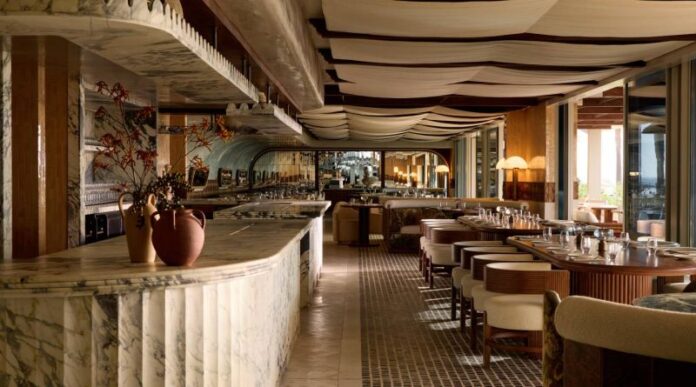
The Western Cape’s 2026 summer season marks a profound shift toward “Playful Sophistication.” Moving away from the era of rigid, four-hour tasting marathons, a wave of new openings is prioritising à la carte flexibility and immersive storytelling. This feature explores the essential new tables defining the Mother City and the historic valleys of the Winelands.
Cape Town: The Urban Vanguard
The city’s newest spots prioritise multisensory “Immersive Gastronomy,” where music and narrative are as vital as the plate.
Amura (Gardens): Tucked inside the Mount Nelson Hotel, this is the African debut for Michelin-starred Ángel León. It is a “marine-voyage” featuring experimental dishes like plankton-infused butter and sustainable “seafood chorizo” in a space mimicking the Cape’s kelp forests.
The Wiggle Room (Bree Street): This intimate 12-seater counter at 61 Bree Street has become the season’s “it” reservation. Chef Ismail “Fish” Amos cooks without a set menu, improvising courses to the rhythm of his own vinyl record collection.
bare. (CBD): Located at 90 Shortmarket Street, bare. is a masterclass in versatility. It transitions from a sun-drenched brunch café to a moody, candlelit bistro at night, offering honest, ingredient-led dishes.
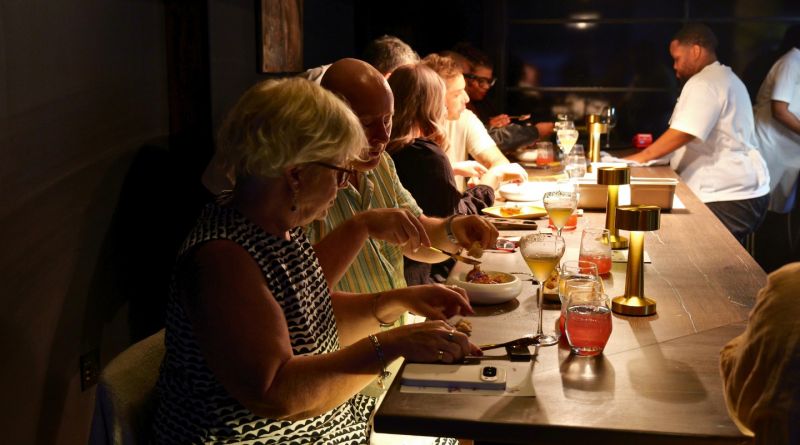
Omri (Camps Bay): Perched on 35 Victoria Road, Omri is the signature restaurant of the new Morea House. It pairs modern Lebanese and Levantine cuisine with Atlantic views, featuring soft blue frescoes and sophisticated sharing plates.
Le Bistrot de JAN (V&A Waterfront): Found at the InterContinental Table Bay, Jan Hendrik van der Westhuizen’s newest home celebrates French bistro nostalgia with signature truffle chicken pies and steak frites, led by Executive Chef Giles Edwards.
Arlecchino (Sea Point): A high-energy Italian escape at 16 Regent Road that channels 1970s charm. It is trending for its handmade pastas and theatrical table-side service, spearheaded by Natasha Sideris.
Café Sofi (Gardens): Tucked into the Longkloof Precinct, this elegant café serves as a refined neighborhood nook for European-style brunch and afternoon cocktails.
Winelands: Heritage Reimagined
Estate dining has evolved into a “Farm-to-Fire” movement, where chefs are moving into historic cellars to cook over open flames with hyper-local, regenerative produce.
Arum (Franschhoek): Occupying the 1812 cellar at Boschendal, this FYN Group project led by Peter Tempelhoff and Travis Finch uses smoke and fire to elevate estate-grown produce, such as rooibos-smoked duck.
Plenitude (Stellenbosch): Based at Majeka House, Chef Callan Austin offers “seasonal abundance.” It is a relaxed neighborhood alternative to fine dining, focusing on clean, generous plates.
Geuwels (Somerset West): Recently reopened at Vergenoegd Löw, this spot under Chef Michelle Theron uses indigenous Cape ingredients to tell a story of local heritage through a signature “Indigenous Food & Wine Pairing.”
The Verdict
The 2026 culinary landscape proves that the Western Cape no longer needs to imitate European standards. Confidence has shifted toward “intentional” dining—where the soul of the dish and the comfort of the guest matter most. From neon-lit city counters to fire-lit vineyard cellars, the barrier between the kitchen and the table has dissolved, creating a more personal and accessible food culture.