A Walker Bay estate refreshes its most familiar wines and points visitors toward something rarer in the press shed.
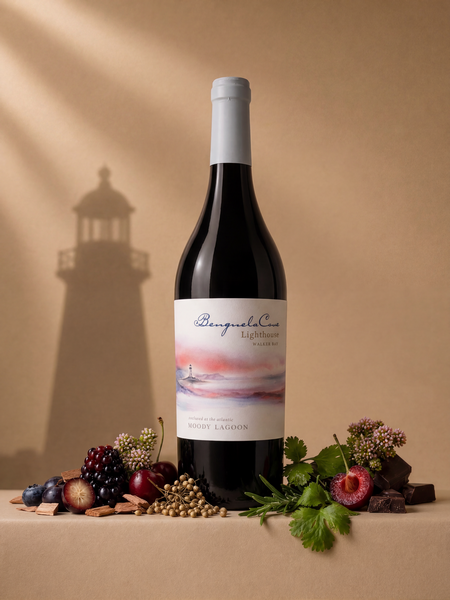
The lighthouse at Benguela Cove stands beside the winery, a modest white tower on the estate’s lagoon-facing edge, just outside Hermanus. It is also the symbol that appears on every bottle of the estate’s Lighthouse range, a label conceived as a tribute to the marginal, sea-cooled climate that gives these wines their character.
This year, that label has been redrawn. The Lighthouse range, the more approachable, earlier-drinking wines from Benguela Cove’s cellar has been given a cleaner, more contemporary identity. The wines inside are a Sauvignon Blanc, a Provence-style Rosé, a Shiraz, and the multi-award-winning Moody Lagoon red blend, all made from estate-grown grapes and shaped by a terroir few South African producers can match.
A site, not a brand
Benguela Cove sits two metres above sea level in the Walker Bay wine region, its 70 hectares of vineyards forming the longest stretch of ocean-facing vines in the country. The Atlantic, chilled by the Benguela Current sends a south-easterly breeze across the canopy through the growing season. The result is slow ripening, restrained alcohols, bright fruit aromas, fresh acidity and a saline thread that runs through every wine the estate makes.
Cellar Master Johann Fourie, who has overseen the winemaking since 2017, selects specific parcels of fruit from slopes and soils that lend themselves to fruit-forward, smoother wines, the Lighthouse range is soft but vibrant, built for earlier release and easy enjoyment.
Why provenance matters in olive oil
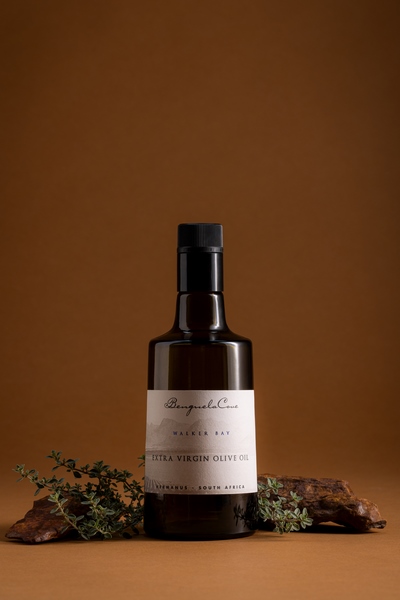
Tucked between the vines and the water are Benguela Cove’s olive groves, planted to three classic Tuscan cultivars: Coratina, Frantoio and Leccino. The olives are harvested at peak ripeness and cold-pressed on the estate. The resulting oil is sold only at the cellar door and through the online shop.
That distinction matters. Olive oil is the most adulterated agricultural product in the European Union, and global testing regimes routinely find supermarket “extra virgin” bottles falling short of the grade, either cut with cheaper refined oils or downgraded by age before they reach the shelf. Real extra virgin olive oil is fresh fruit juice: perishable, seasonal, and best within months of pressing. The longer the supply chain, the more time the polyphenols have to fade and the polyphenol count is where most of the health benefits live.
The case for the daily spoonful
Penny Streeter OBE, who relaunched the estate in 2013, is a quiet evangelist for the old Mediterranean habit of taking a daily spoonful of good olive oil, neat, first thing in the morning.
The clinical literature supports the practice. Extra virgin olive oil is rich in monounsaturated fats, vitamin E and polyphenols, including oleocanthal, the compound responsible for the peppery catch at the back of the throat that quality producers treat as a marker of freshness. Sustained daily consumption has been linked to reduced LDL cholesterol, lower blood pressure, improved inflammatory markers, and cardiovascular and neurological protection. The Cleveland Clinic recommends one and a half to three tablespoons a day; the European Food Safety Authority has approved a health claim linking olive oil polyphenols to the protection of blood lipids from oxidative stress.
The peppery sting of real extra virgin olive oil is the chemistry doing its work and it is the first thing to disappear from a bottle that has travelled too far.