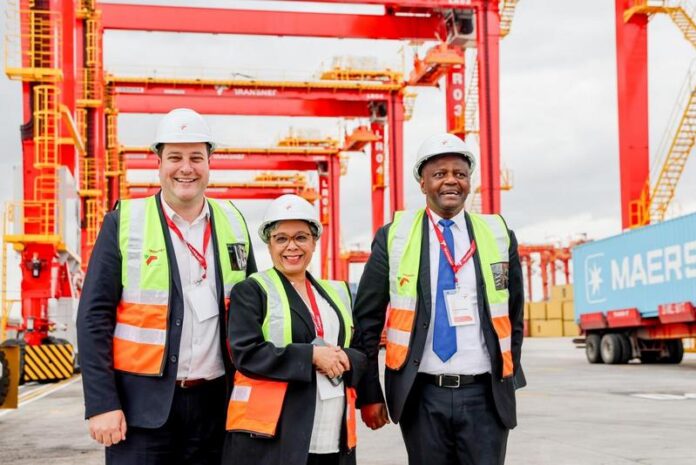
Cape Town is more than just Table Mountain, wine farms, and beaches. It is also a vital gateway to the world for South Africa’s fresh produce — from juicy pears and plums to award-winning wines. This week, the city’s port took a big leap forward with the arrival of nine new Rubber-tyred Gantry cranes. Sleek, towering, and fitted with high-tech features, they are the start of 28 new machines being rolled out to transform the Cape Town Container Terminal.
Mayor Geordin Hill-Lewis called the upgrade a “game changer” for jobs and growth, while Transnet described it as a milestone in efforts to modernise and speed up operations.
Why It Matters for Your Basket of Fruit
It might sound like an industrial story — but it’s really about what lands on your table. The Western Cape’s fruit farmers send around 80% of their apples, grapes, pears, and peaches out through Cape Town’s port. When the port is slow, fruit gets delayed, prices climb, and exporters sometimes lose contracts with international buyers.
By introducing new cranes that can keep working even when the famous Cape winds blow at 90 km/h, the city’s farmers now have a smoother path to markets abroad. That means better stability for jobs in the farming regions, and fresher produce making its way to stores both overseas and here at home.
Smoother, Greener, Faster
These aren’t just bigger cranes. They come with diesel-electric hybrid engines that use fuel more efficiently and create fewer emissions. Operators have 3D camera systems giving them crystal-clear views of cargo. The result? Faster, safer, and greener handling of everything from containers of fruit to bottles of fine Cape wines.
In fact, the results are already showing: refrigerated container volumes are up by 32% this year, overall exports have climbed 24%, and vessel backlogs are a thing of the past.
More Than Machines
Behind the towering cranes are people too. Transnet has added a fourth shift to allow true 24-hour operations, introduced performance incentives, and rolled out real-time monitoring systems. For the thousands of workers, from port hands to farm packers, these changes mean less stress and more certainty.
There are also plans to expand the Culemborg Intermodal Logistics Precinct — think of it as a “backstage area” for the port — where goods can be prepared and moved more efficiently before shipping out.
A Lifestyle Impact
So next time you sip a glass of Chenin Blanc or pick up a punnet of export-quality grapes, remember: those nine new cranes at the Cape Town port are part of the story. They don’t just move containers; they keep the lifeblood of the Western Cape’s farms, kitchens, and dining tables flowing.