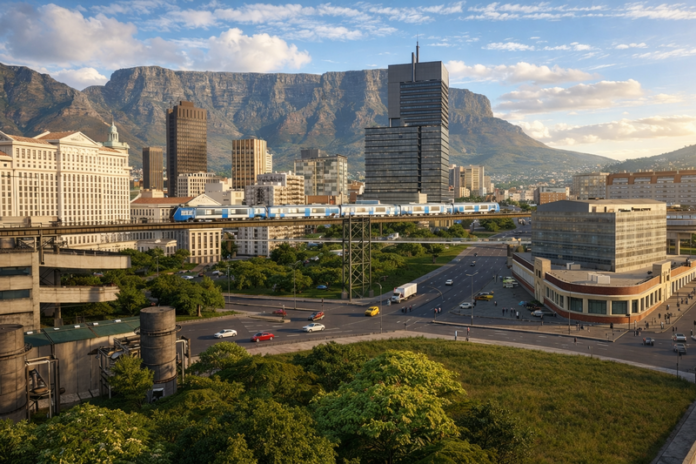
Cape Town is currently facing a compounding transport crisis, recently ranking as the ninth most congested city in the world with the average driver losing 94 hours a year to traffic gridlock. While standard morning and evening rush hours already push the highway system to its limit, the real strain emerges when multiple major events collide. The city regularly experiences immense pressure when cruise liners dock at the V&A Waterfront Cruise Terminal simultaneously, instantly flooding narrow grid arteries like Dock Road and Buitengracht Street with thousands of arriving tourists.
When these maritime turnarounds overlap with concurrent world-class sporting events—such as the Two Oceans Marathon, the Sanlam Cape Marathon, international rugby fixtures, or a major cycling event closing down key regional roads—as well as a heavy reliance on single-occupancy commuter vehicles, the city’s road network reaches a complete standstill.
For Cape Town to maintain its competitive edge as a premier global hub, the transition between the port, hotels, and the airport must be seamless. The solution to this bottleneck may not lie on the existing roads, but rather on a new path above them.
Exploring the “Air–Land–Sea” Concept
To address these challenges, various innovative concepts are being discussed within the maritime and engineering sectors. One proposal gaining attention is the Capetrain Catalyst Project (Cape Town Sky Train) a grade-separated express rail network envisioned by Senior Automation Engineer Gareth Ramsay.
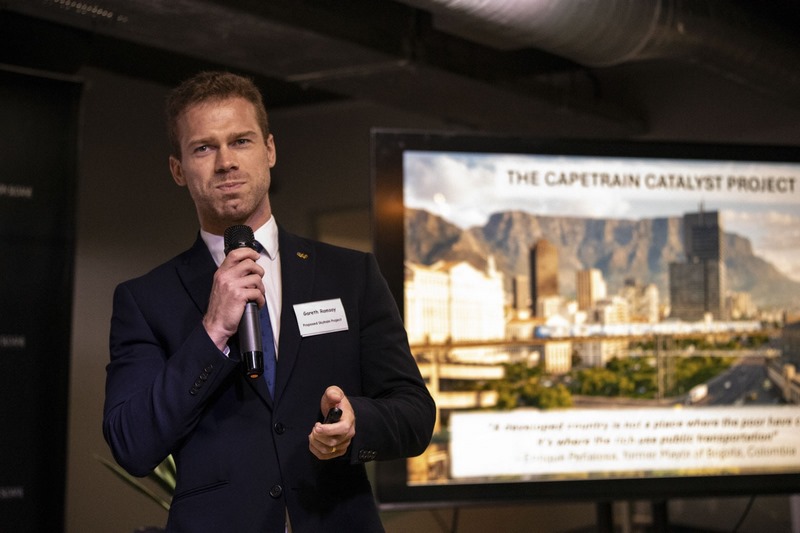
The proposal outlines a dedicated “Air–Land–Sea” corridor—a transport spine that would link the Cruise Terminal directly to the Atlantic Seaboard and the Airport. By exploring an express rail-link a fixed-link alternative, the project aims to offer what the current road network cannot guarantee: absolute predictability. For a cruise line, knowing a transfer will take a set amount of time regardless of highway conditions is a significant factor in long-term deployment decisions.
Integrating with Existing Infrastructure
A key factual element of the Capetrain proposal is its focus on integration with the existing PRASA Metrorail network. With dedicated, grade-separated express lines, the project aims to complement the existing operations by increasing the effectiveness and efficiency of the entire network by reducing travel times by rail throughout the metro. This will also increase ridership through-out the network by providing private vehicle users an improved value proposition of reduced travel times if commute by rail is chosen.
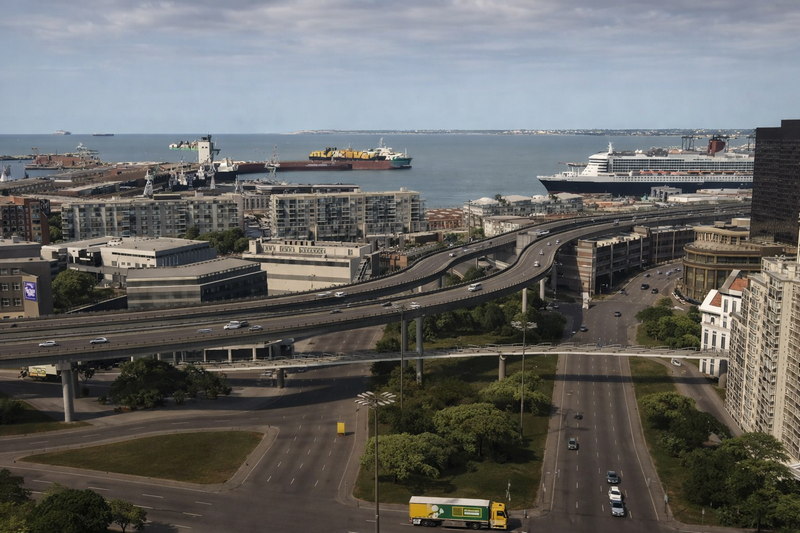
By potentially utilizing the “unfinished” infrastructure of the Foreshore freeways as a foundation, the concept aims to minimize new construction footprints. This approach suggests a future where high-capacity tourist and commuter movements are elevated above the street-level grid, leaving the roads clearer for local traffic and traditional public transport.
Enhancing Regional Tourism Nodes
The proposal also considers how an express rail system could expand the reach of the Western Cape’s tourism. A dedicated link to the airport and potentially to regional hubs like the Cape Winelands could allow tour operators to plan excursions with much tighter margins. This would make inland trips a more viable reality for passengers who might otherwise hesitate to leave the immediate harbour precinct due to traffic uncertainty.
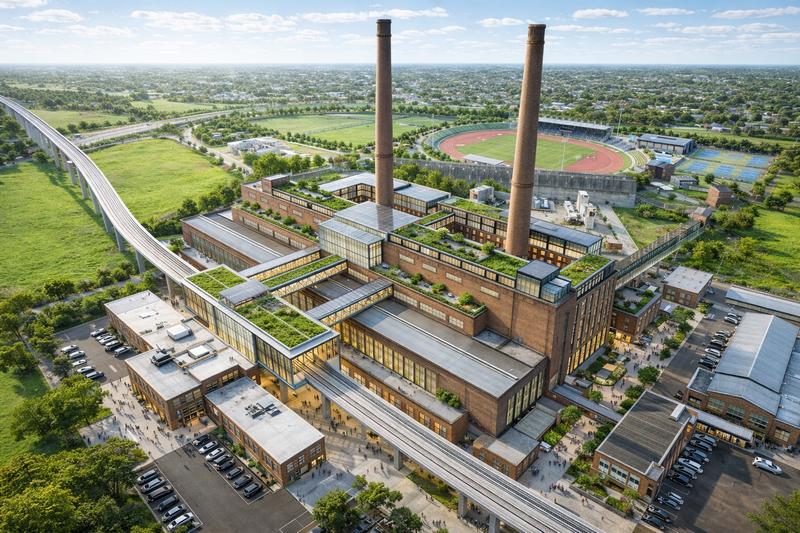
As we reach the end of a record-breaking maritime week, the focus is naturally turning toward the next phase of the city’s development. While the port is established as a world-class stop, the long-term growth of the industry may depend on how we evolve our connectivity on land and “future-proof” the city to sustain ongoing tourism growth, economic expansion and rising population levels. Exploring creative infrastructure solutions today ensures that Cape Town remains a global leader for travellers and residents alike.