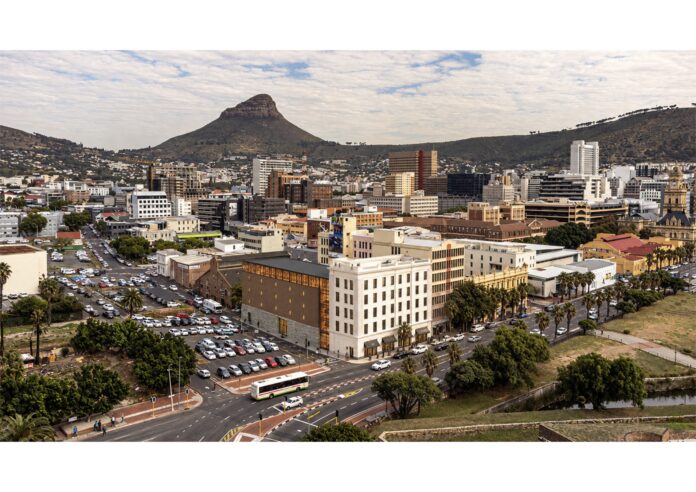
Cape Town is set to blend architectural heritage with social innovation as the historic Mill House—located directly opposite the iconic Castle of Good Hope—undergoes a transformative redevelopment. Cape Town Opera has announced the establishment of the Judith Neilson Theatre Development Centre and the Cape Town Opera Academy. Backed by a founding commitment from the Judith Neilson Foundation, this major initiative promises to reimagine the role of performing arts in South Africa’s economic landscape.
Scheduled to begin development in early 2028, the project will sensitively remodel Mill House into a state-of-the-art creative hub. The facility will feature a dedicated theatre, specialized set-construction workshops, and technical suites for costume design, millinery, and wig-making. While Cape Town Opera’s mainstage productions will remain at the Artscape Theatre, Mill House will serve as the engine room for the company’s expanding educational and technical training missions.
Beyond the Spotlight: Why This Initiative Matters
In a country where youth unemployment remains a critical challenge, the strategic value of this development lies far beyond the footlights. Opera is often perceived as an elite art form confined to the stage, but each production relies on an extensive network of skilled craftspeople, technical directors, stage managers, and artisans.
By launching a unified academy that integrates artistic training, technical education, and live production experience, Cape Town Opera is establishing a direct bridge between learning a trade and entering the workforce. As Alex Gabriel, CEO of Cape Town Opera, noted, opera cannot exist in isolation from the broader national jobs conversation.
Cross-Industry Skills for a Thriving Creative Economy
What makes the Theatre Development Centre uniquely significant is the high transferability of its training. The technical capabilities taught within these specialized workshops—ranging from carpentry and sound engineering to advanced garment fabrication—are directly applicable across the wider creative economy:
- Film and Television: High-end set building, prop design, and period costume fabrication.
- Live Events and Festivals: Stage management, lighting design, and large-scale logistics.
- Drama and Dance: Tailored technical execution and production design.
Cape Town Mayor Geordin Hill-Lewis highlighted the broader economic impact, emphasizing that investing in vocational arts training builds a versatile workforce capable of sustaining South Africa’s growing film and event industries.
Safeguard for Cultural Storytelling
Beyond immediate job creation, the Centre addresses a long-standing vulnerability in South Africa’s cultural sector: the loss of institutional knowledge. Without dedicated pipelines for training back-of-house specialists, local theatre companies face increasing friction in staging complex productions.
The new Academy unifies existing success stories—such as the high-school Foundation Studio Programme and the world-renowned Young Artist Programme—with brand-new technical tracks. By anchoring these programs inside an active, producing opera house, the Centre ensures that technical expertise and indigenous storytelling capabilities are preserved and passed down to future generations. The revitalized Mill House will stand not only as a restored monument to the past, but as a vital incubator for South Africa’s creative future.