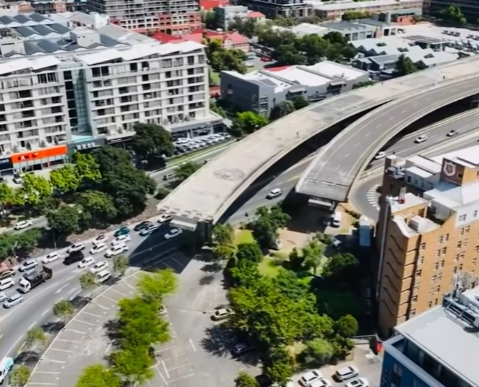
For over half a century, Cape Town’s famous unfinished freeways stood as a quirky monument to halted progress—a lingering urban puzzle hanging over the CBD. Following the City’s 2 October 2026 announcement unveiling an ambitious transformation plan, many assume engineers will simply complete the 1970s concrete highways.
In reality, the vision is far more radical. Rather than extending the old overhead structures, the City is replacing and reconfiguring the entire precinct. Phase 1 introduces a sleek, modern link bridge over Buitengracht Street to seamlessly route incoming traffic toward the Atlantic Seaboard. Phase 2 will shift outbound traffic into a new tunnel along Duncan Road. Once this network is operational, the infamous old elevated freeways—the “bridges to nowhere”—will actually be taken down.
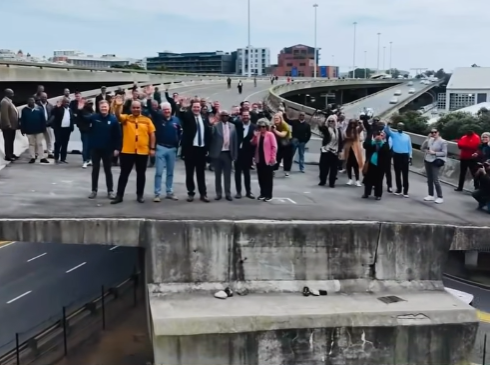
By removing these massive concrete barriers, the plan reconnects the CBD directly to the harbour edge, unlocking 15 hectares of prime inner-city land that has sat unused for over 50 years. For local lifestyle and urban culture, this shift promises a complete overhaul of the mother city experience.
A Walkable, Oceanfront Lifestyle
Imagine strolling from the vibrant pulse of the CBD directly to the water’s edge without negotiating a maze of highway ramps and traffic. The vision features a tree-lined harbour promenade stretching toward Sea Point, integrated with dedicated cycle paths, green parks, and pedestrianized streets. It transforms the Foreshore from a high-speed transit corridor into a lively destination in its own right—where dining, outdoor fitness, and community living meet the sea.
Relief for Daily Commuters
Traffic congestion entering and exiting the Atlantic Seaboard has long plagued residents. By allowing traffic bound for Green Point and Sea Point to bypass the CBD grid entirely—and introducing dedicated MyCiTi bus priority lanes—commuters can expect a far smoother daily flow into and around the city center.
A Vibrant, Inclusive Neighborhood
Unlocking dormant land in the city core creates room for mixed-use developments, including retail, restaurants, creative workspaces, and affordable inner-city housing. This move toward accessible, higher-density living brings energy back into the CBD after hours, giving more Capetonians the chance to live closer to where they work and play.
What Lies Ahead
The announcement kicks off a comprehensive public consultation phase, inviting Capetonians to help shape the final engineering and urban design. Construction on Phase 1 is targeted to begin during the next Council term (2026–2031).
Cape Town has always been defined by its extraordinary natural setting between mountain and sea. By replacing its most notorious man-made barrier with a human-scaled gateway, the city is taking a bold step toward a more connected, walkable, and modern coastal lifestyle.