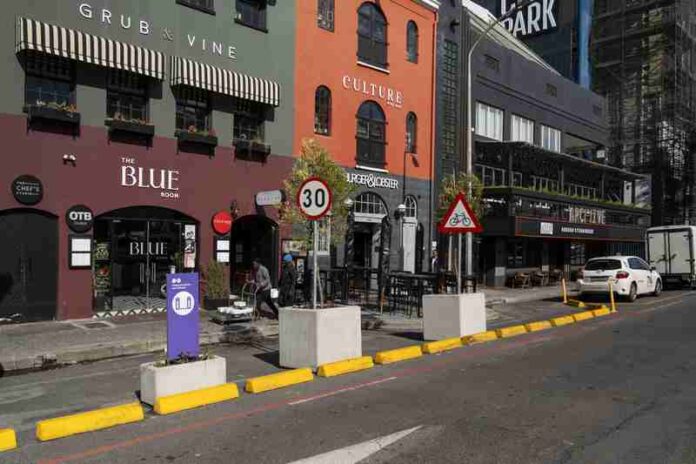
Cape Town’s Bree Street has always had a pulse of its own. Lined with restaurants, bars, boutiques and creative spaces, the inner-city strip is one of the city’s most recognisable lifestyle destinations. But now, the experience of walking through Bree Street has changed dramatically — and locals are being invited to slow down and enjoy the city in a completely new way.
The newly launched Safe Passage Precinct has transformed part of Bree Street into South Africa’s first inner-city street experiment, temporarily redesigning the space to prioritise people over cars.
Slower Streets, Softer Energy
Instead of the usual rush of traffic and crowded pavements, visitors are now greeted with calmer streets, wider pedestrian zones, greenery, seating areas and dedicated mobility spaces. The project narrows traffic between Wale and Shortmarket Streets to a single mixed lane in each direction, freeing up room for a more relaxed and social urban atmosphere.
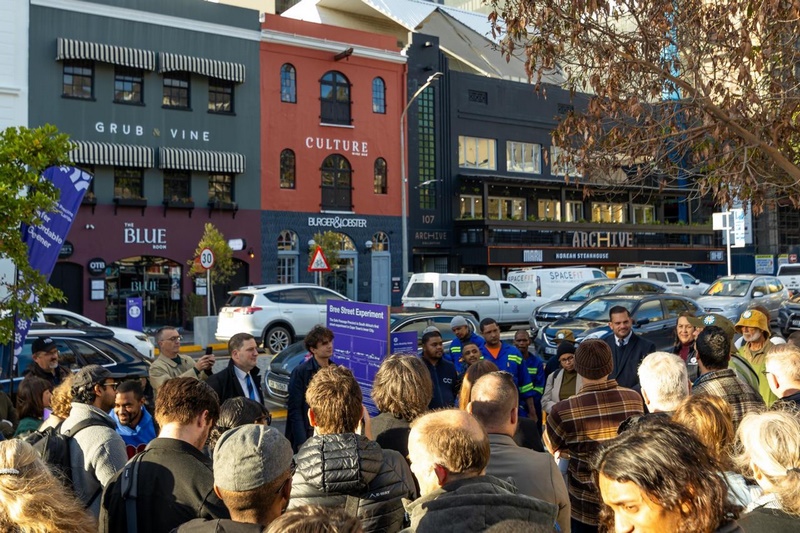
For many Capetonians, the shift is immediate. Bree Street feels less like a road to drive through and more like a destination to experience.
The experiment, which will run for six months, uses temporary and reversible urban design features such as bollards, removable seating, planters and redesigned loading bays to test how people interact with a more human-centred city space. While urban planning language often sounds technical, the reality on the ground is simple: the street feels softer, safer and more inviting.
A Street Designed for People
Pedestrians move more comfortably between cafés and shops, cyclists navigate with greater ease, and delivery drivers have designated spaces that reduce congestion. Traffic slows to a calmer 30km/h pace, changing the mood of the street entirely.
The redesign also builds on Bree Street’s growing reputation as a social hub. Over recent summers, the popular Car-Free Sundays turned sections of the road into gathering spaces filled with families, music and outdoor dining. The Safe Passage Precinct extends that same spirit into everyday city life, encouraging people to linger a little longer.
For visitors, the transformation offers something increasingly rare in modern cities: space to pause.
The Rise of the Urban Hangout
Instead of weaving between parked cars and fast-moving traffic, people can sit beneath newly installed greenery, meet friends outdoors or simply take in the energy of the city at street level. Restaurants and cafés benefit from the slower pace too, with the pedestrian-friendly atmosphere naturally encouraging foot traffic and spontaneous stops.
The project also introduces creative public art and branding installations across the precinct, giving the area an even more vibrant visual identity. Local artists contributed artwork featured throughout the route, reinforcing the street’s creative character.
Importantly, the experiment is not only about aesthetics. It forms part of a broader vision to rethink how South African cities function and who urban spaces are designed for. The insights gathered from Bree Street could eventually influence future projects in Woodstock, Salt River, Langa and other parts of Cape Town.