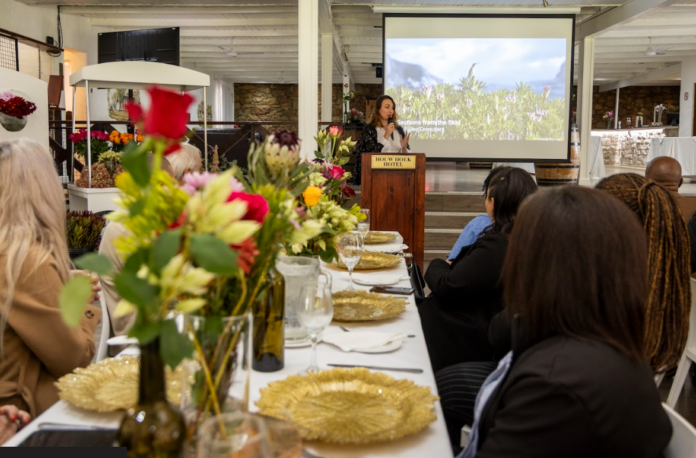
Wine farmers, conservationists and industry leaders recently gathered at Houw Hoek Hotel in Grabouw to celebrate a remarkable environmental milestone: 20 years of the WWF South Africa Conservation Champion programme. The initiative has become one of the country’s most successful examples of conservation and agriculture working together, with more than 23 500 hectares of threatened natural habitat now actively protected across the Cape winelands.
Hosted by radio personality Angel Campey, the event reflected on two decades of achievements while looking ahead to the future of conservation-led farming in South Africa.
A Partnership Born from Necessity
The origins of the programme date back to 2004 when concerns grew over the expansion of vineyards into the highly sensitive habitats of the Cape Floral Kingdom. To address this challenge, the Biodiversity and Wine Initiative (BWI) was launched, encouraging wine farmers to conserve portions of their land alongside their agricultural operations.
The initiative quickly gained support throughout the industry. By 2015, more than 90% of South Africa’s wine sector could certify through the partnership between BWI and Integrated Production of Wine (IPW).
In 2016, WWF South Africa evolved the programme into the Conservation Champions initiative, raising environmental standards and recognising wine farms that demonstrate exceptional commitment to biodiversity conservation, sustainable farming practices, and innovation in water and energy management.
Vergelegen Wine Estate became the first participating farm in 2005 and remains a Conservation Champion today. It has since been joined by 59 other farms, with Koopmanskloof and Zevenwacht among the latest additions.
Protecting a Global Biodiversity Treasure
The Cape Floristic Region is recognised as one of the world’s most important biodiversity hotspots. Often referred to as the Cape Floral Kingdom, it is home to more than 9 000 plant species, many found nowhere else on Earth.
Today, the 60 Conservation Champion farms collectively protect 23 585 hectares of natural vegetation. Significantly, more than 60% of this land is classified as endangered or critically endangered, highlighting the vital role these farms play in safeguarding South Africa’s natural heritage.
The programme’s growth reflects a steady commitment to conservation. Membership increased from 40 Champions in 2019 to 50 in 2021 and now stands at 60 farms across the wine-producing regions of the Western Cape.
Conservation in Action
One of the programme’s most successful recent developments has been the Activation Fund. Supported by the Table Mountain Fund and contributions from conservation supporters Neville and the late Pamela Isdell, the initiative provides funding of up to R50 000 per farm for environmental projects.
The fund has already assisted 16 farms with projects ranging from clearing invasive alien vegetation and restoring river systems to developing ecotourism opportunities and improving sustainable agricultural practices.
These projects demonstrate how conservation can create practical benefits for both the environment and farming communities.
Raising the Bar for Sustainable Wine
For wine producers, the programme provides recognition for environmental leadership while helping strengthen the international reputation of South African wines.
Consumers also play an important role. Wine lovers can identify participating producers by looking for the distinctive sugarbird and protea symbol on bottles. The emblem represents the close relationship between nature and agriculture and allows consumers to support farms that actively protect biodiversity.
As aexplores expanding the model into the fruit farming sector, the vision remains clear: creating a future where productive agriculture and thriving ecosystems exist side by side, ensuring that the Cape Floral Kingdom continues to flourish for generations to come.