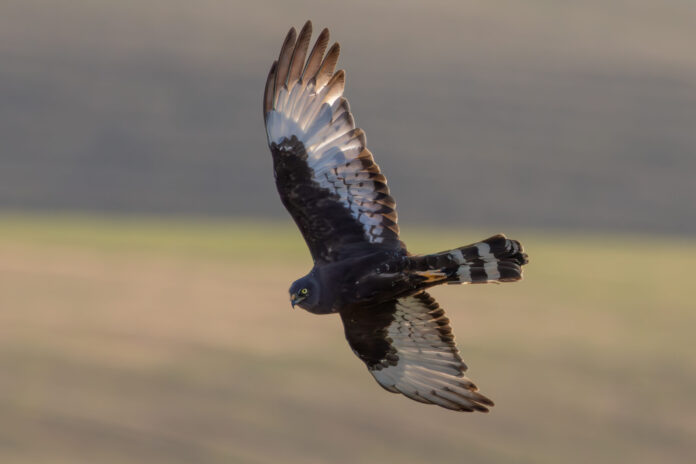
While the giant 91-meter blades are the stars of the R60, a quieter, high-stakes drama is unfolding in the rolling hills of the Overberg. Here, in the heart of the “Renosterveld,” a team of conservationists and artificial intelligence experts are working to solve one of the greatest dilemmas of our time: how to generate clean energy without harming the very nature we are trying to save.
The Bird of the Year
In early 2026, the Black Harrier was officially named South Africa’s Bird of the Year. It’s a bittersweet title. With fewer than 1,300 individuals remaining—making them rarer than the Black Rhino—these striking, ground-nesting raptors are teetering on the edge of extinction.
The Overberg wheatbelt is their stronghold, but it is also one of the windiest places in the country. To a Black Harrier hunting for field mice, a spinning turbine blade isn’t a power source—it’s an invisible threat.
AI: The Eyes that Never Blink
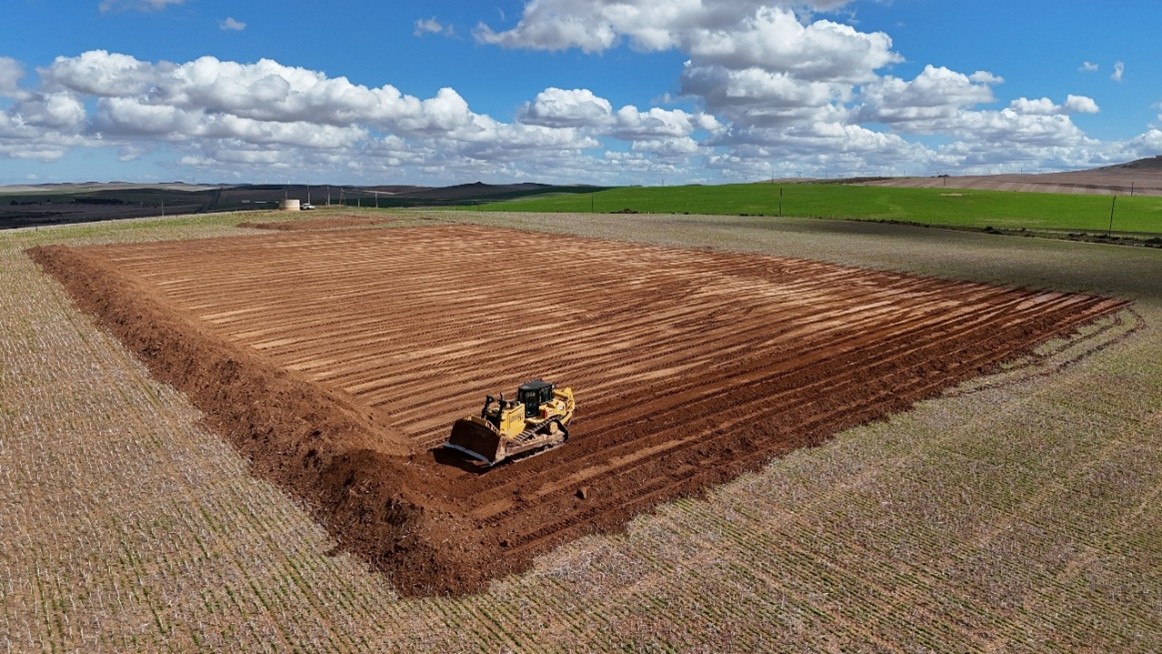
Walking onto the construction site of the new 400MW Overberg Wind Farm, you won’t just see cranes. You’ll see the Bioseco system—an array of high-tech cameras mounted on the turbine towers.
These aren’t standard security cameras. Powered by AI, they scan the skies 360 degrees, 24 hours a day. If the system detects a bird of a certain wingspan—like a Harrier or a Cape Vulture—it triggers a tiered response. First, it emits a non-harmful acoustic deterrent (a “don’t come closer” sound). If the bird continues its flight path, the AI takes over and automatically triggers a “Shutdown on Demand.” In less than 45 seconds, the massive blades feather and come to a halt, allowing the bird to pass safely. Once the sky is clear, the sensors “green-light” the turbine to restart.
The “Painted Blade” Experiment
Perhaps the most striking visual change for your readers will be the blades themselves. Following a successful trial at the Hopefield Wind Farm, some of the new turbines near Swellendam are featuring patterned blades.
“Birds don’t see motion the way we do,” explains a local ornithologist. “To them, a white blade spinning against a cloudy sky becomes a transparent blur.” By painting one blade with bold red or black stripes, the “motion smear” is broken. It gives the bird a visual “stop sign,” helping them realize there is a solid object in their path.
The Human Heart of the Project
Despite the AI, the human touch remains. The Overberg Renosterveld Trust (ORT), led by Dr. Odette Curtis-Scott, has been working tirelessly to secure “conservation easements”—agreements with local farmers to protect the tiny patches of natural veld between the turbines where the Harriers nest.
For the first year of operation, human “Sky-Watchers” will still be stationed on the hills with binoculars, working alongside the AI. It’s a job that requires infinite patience and a deep love for the Overberg landscape.
The Population: Only 1,300 Black Harriers left globally; 99% live in South Africa.
The Tech: Automated “Shutdown on Demand” can stop a turbine in under 45 seconds.
The Impact: Early data from existing sites like Excelsior shows that these shutdowns result in less than 0.5% loss in power revenue, proving conservation is good for business.
The Mission: To ensure the Overberg remains a “flyway,” not a “no-fly zone.”
Coming Next…
In our final installment, Part 3, we head into the cafes and boardrooms of Swellendam to see how this “Wind Boom” is changing the town’s economy and what the future looks like once the last blade is bolted into place.