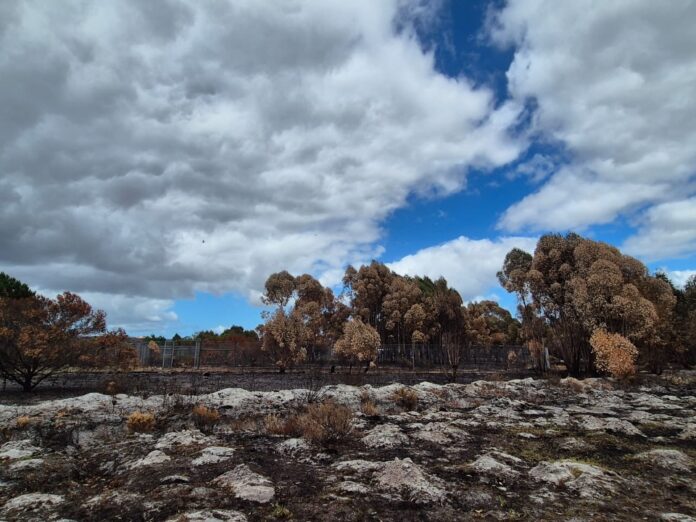
In the early hours of 8 January 2026, the wind didn’t just howl—it roared. In the Stanford Valley, the high-security electrical fences of Panthera Africa Big Cat Sanctuary didn’t just fail; they buckled and melted under the heat of a runaway fire. But as the physical barriers turned to ash, a new kind of defense emerged: a human chain of courage that stretched from the Overberg to the heart of the Free State.
From the smallest pollinators to the kings of the savanna, the January 2026 fires have been a test of more than just disaster response—they have been a test of our humanity. With over 132 000 hectares already scorched across the province, the devastation is historic, but so is the bravery.
The Midnight Move: Rescuing the “Tiny Refugees”
Just a few kilometres away on Willowdale Farm in Stanford, the conservationists at Honeybee Heroes realised a terrifying truth: a bee that survives the flames will still die of starvation in a landscape with no flowers.
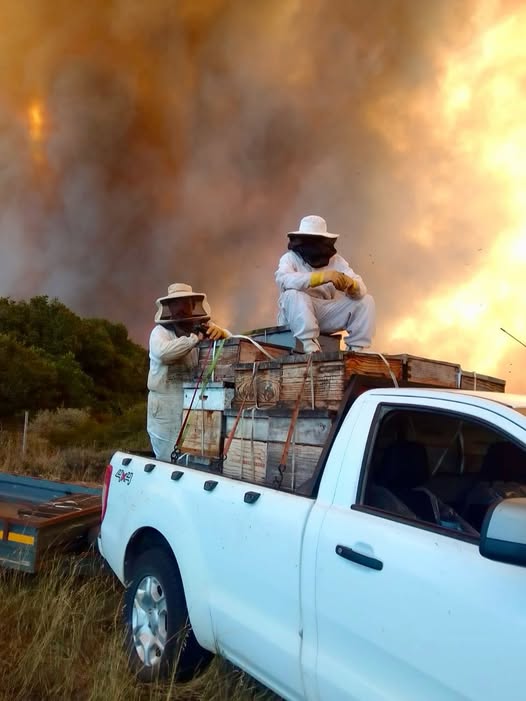
Working until 01h00 for several nights in mid-January, teams moved nearly 1 000 hives by hand. In the pitch black, with only headlamps and the distant orange glow of the mountains to guide them, these “Bee Heroes” navigated shifting winds to transport millions of pollinators to safer ground. It was a logistical miracle performed in silence, ensuring that when the rains finally return, the bees will be there to bring the fynbos back to life.
A National Sanctuary: The Split Pride
At Panthera Africa Big Cat Sanctuary, located on Farm 933 in Stanford, the heroism was both desperate and dangerous. As the fires escalated on 8 January 2026, 26 apex predators—lions, tigers, and leopards—became vulnerable. What followed was an extraordinary national mobilisation. In an act of “Unity in Strength,” sanctuaries across the country opened their gates to the “Split Pride”:
-
LIONSROCK (Free State): Welcomed king lions Chaka, Oliver, Neptune, Ivana, and Karlos.
-
ADI Wildlife Sanctuary (Free State): Provided a 15-hour emergency haven for white lionesses Lei-ah and Elsa.
-
Shamwari (Eastern Cape): Took in the elderly lion Lancelot and several servals.
-
Jukani (Plett): Offered refuge to Baguira the lioness and Arabella the tiger.
While we mourn the loss of Rays the tiger, who passed away on 10 January 2026 after succumbing to severe smoke inhalation, his memory has become a rallying cry for the rebuilding of a “forever home.” When the cages vanished, the entire country became the sanctuary.
The Boy from Mamre: The Ultimate Sacrifice
Perhaps the most inspirational link in this human chain didn’t come from a professional team, but from a child in the West Coast town of Mamre.
Facing the dual threat of the approaching fires and the discovery that his beloved horse, Forest, had been starved and beaten by a trusted caretaker, a young boy made the most courageous decision of the season. On 15 January 2026, through tears, he called the SPCA Horse Care Unit and surrendered his friend to ensure his survival.
Today, Forest is thriving in a permanent home in Noordhoek, a living testament to a child who loved enough to let go.
Community is Fireproof
As we look at the charred landscapes of Stanford, Franschhoek, and Mossel Bay, it is tempting to see only loss. But if you look closer, you see the fingerprints of a “human firebreak.” You see the strangers who offered their land to bee hives, the vets who drove 15-hour shifts to relocate lions, and the boy who put his horse first.
The fires of January 2026 have proved that while fynbos must burn to grow, our community only grows stronger in the heat. The fences may have melted, but the human chain remains unbroken.
Join the Chain
Support the Bees: Visit Honeybee Heroes online to adopt a relocated hive and help them fight the “Green Drought.”
Rebuild the Sanctuary: Help Panthera Africa restore their camps via their official BackaBuddy fire relief fund.
Protect the Horses: Support the Cape of Good Hope SPCA Horse Care Unit to ensure every “Forest” has a safe place to land.