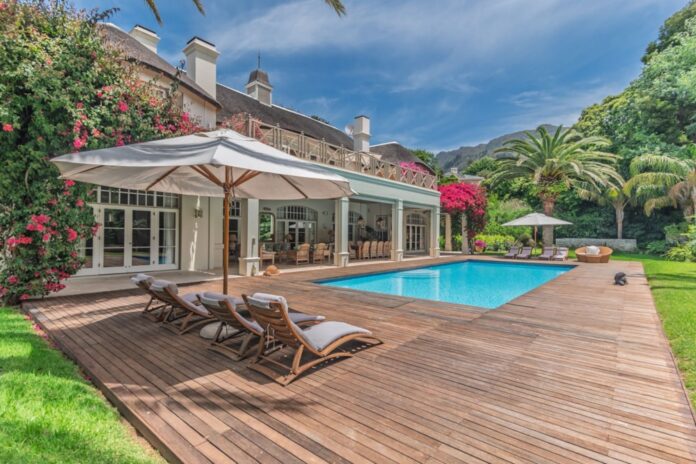
Cape Town’s luxury property market exits 2025 fundamentally transformed. Rather than a short-lived surge, the past year delivered a structural reset — marked by discreet mega-sales, rising average prices across prime suburbs and a decisive shift towards off-market transactions. These dynamics are now shaping how the city’s upper end moves into 2026.
According to Alexa Horne, Managing Director of DG Properties, 2025 was less about momentum and more about permanence. “2025 wasn’t just a strong year — it reset expectations. We saw a level of activity, confidence and sophistication that has permanently raised the bar for Cape Town’s luxury market.”
A New Reality at the Very Top
At the highest tier, properties priced above R50 million — and increasingly above R100 million — moved from being occasional trophy purchases to an active, competitive segment. Significant residential transactions were concluded across Upper Constantia, Bishopscourt and the Atlantic Seaboard, reinforcing Cape Town’s status as South Africa’s undisputed luxury capital.
What stood out was not only pricing, but process. High-value deals were increasingly concluded quietly, away from public listings, signalling a more mature and globally aligned market.
Discretion Becomes the Default
One of 2025’s defining shifts was the rise of private, off-market transactions. Ultra-high-net-worth buyers and sellers favoured discretion, trusted networks and confidential negotiations over visibility.
“Many of our clients are not driven by exposure,” Horne explains. “They want privacy, certainty and expert guidance — and they want transactions handled quietly.”
This trend mirrors established global luxury hubs such as London, New York and Sydney. Beyond residential homes, demand extended to lifestyle-led investments, including boutique wine farms in Tulbagh and the Swartland, reflecting longer-term lifestyle planning rather than speculative buying.
Southern Suburbs Rival the Atlantic Seaboard
While the Atlantic Seaboard remains South Africa’s most valuable residential strip — with prices reaching up to R170,000 per square metre — the Southern Suburbs firmly matched its momentum in 2025.
Upper Constantia and Bishopscourt delivered standout results, attracting buyers seeking space, privacy and security without sacrificing proximity to the city. These suburbs now rank among the most desirable luxury residential addresses on the African continent.
Development Responds to Limited Supply
A shortage of premium stock in prime locations remained a defining feature of the year, driving both competition and pricing. In response, a wave of high-end developments advanced across the city, catering to buyers seeking turnkey homes with uncompromising design, security and ease of living.
Supportive national conditions — including easing inflation and interest rate cuts — further bolstered confidence through the second half of 2025.
Buyer Demand Broadens — and Holds
Luxury demand was driven by continued semigration from Gauteng and KwaZulu-Natal, sustained interest from Germany, the UK and across Africa, and renewed international confidence following South Africa’s removal from the FATF grey list.
With limited stock, competition intensified, reinforcing the shift towards off-market transactions.
Rental Strength Signals What’s Ahead
The premium rental market mirrored sales activity. Long-term rentals in Upper Constantia, Bishopscourt, the V&A Waterfront and the Atlantic Seaboard regularly exceeded R100,000 per month, while exceptional short-term rentals surpassed R200,000.
What 2026 Is Set to Deliver
Looking ahead, the fundamentals remain firmly in place. Easing interest rates, restored global confidence and constrained luxury supply are expected to sustain momentum through 2026.
“The market is entering 2026 from a position of strength,” Horne concludes. “Buyers are decisive, sellers are realistic, and Cape Town’s lifestyle appeal continues to differentiate it globally.”
With demand outpacing supply, Cape Town looks set to retain its position as Africa’s leading luxury property destination in the year ahead.