For decades, a five-star stay meant endless indulgence without a second thought for what happened behind the walls. Today, discerning travellers want more than thread count and Table Mountain views—they want to know their footprint isn’t costing the destination they came to enjoy. At Cape Town’s V&A Waterfront, two flagship addresses are proving that high-end hospitality and deep environmental responsibility belong in the same room.
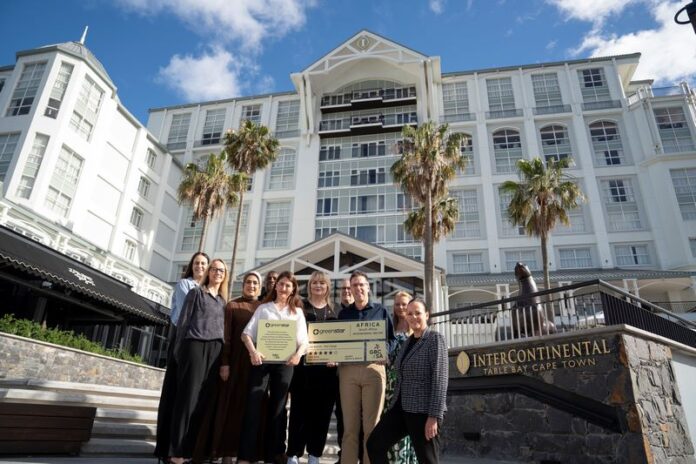
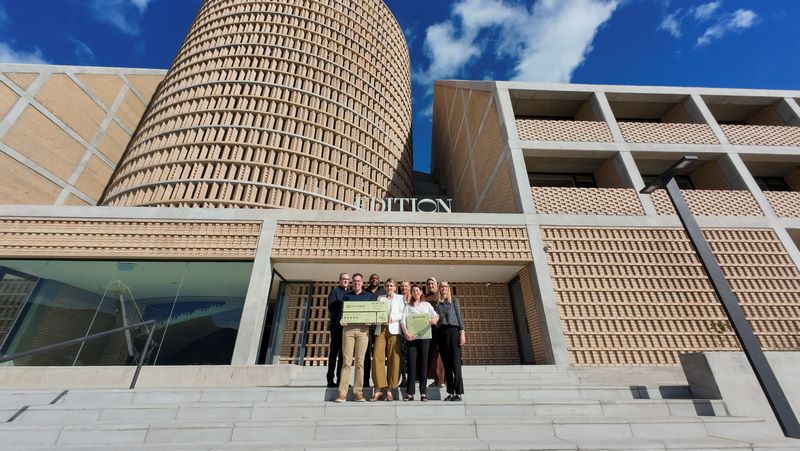
Both the newly relaunched InterContinental Table Bay and the recently opened Cape Town EDITION on Quay 7 have been awarded 5-Star Green Star SA design ratings by the Green Building Council of South Africa (GBCSA)—a benchmark recognised as “South African Excellence”. Scoring 55 and 52 points respectively against a 35-point threshold, the hotels are among the first four projects in the country certified under the new Green Star V2 Pilot tool.
A Shared Backbone for Sustainable Stays
What makes this milestone a game-changer for green travel is how it shifts the burden of sustainability. Instead of forcing individual hotels to solve complex resource challenges in isolation, the new Green Star V2 framework rewards precinct-wide innovation—and the V&A Waterfront has spent over a decade building an invisible utility network that both properties plug straight into:
- Drought-proof water: An on-site desalination plant on East Pier produces enough potable water to supply over 80% of the precinct’s monthly needs, drastically reducing reliance on Cape Town’s municipal supply.
- Ocean-cooled comfort: District seawater cooling uses ocean heat exchangers to remove heat from air-conditioning systems, allowing chillers to run far more efficiently than conventional setups.
- Clean grid power: Through off-site wheeling agreements, renewable electricity supplies up to 70% of the Waterfront’s annual energy demand.
Old Heritage Meets New-Age Design
Beyond shared utilities, each property brings its own design philosophy to conscious travel. Following an 18-month, R1-billion transformation, the InterContinental Table Bay preserved more than 80% of its original core structure, brickwork, and iconic facade—sidestepping the heavy carbon toll of demolition. Mature trees were replanted, thousands of square metres of paving were salvaged for reuse across the precinct, and old carpets were donated to the Astra School for Learners with Special Educational Needs. Inside, self-guided sustainability signage turns a stay into a quiet masterclass in green hospitality.
Down on Quay 7, the Cape Town EDITION was engineered from the ground up with low-carbon post-tensioned concrete slabs, exposed brickwork, and retained heritage harbour walls. Built to maximise natural daylight, indoor air quality, and thermal comfort, the property is modelled at the design stage to cut water use by 75% and energy consumption by 43% against standard baselines—even before the precinct’s off-site renewable electricity is factored in.
Why It Matters for the Future of Travel
In a city that remembers the anxiety of Day Zero and years of load-shedding, sustainable tourism isn’t just a nice-to-have—it is essential for Cape Town’s survival. By embedding clean energy, seawater cooling, and desalination into the Waterfront’s core infrastructure, the precinct ensures that welcoming global visitors doesn’t strain local resources. For travellers, it marks the arrival of effortless eco-luxury: five-star comfort where the planet is taken care of before you even check in.