
When we think of winter wellness, we might think of fuzzy blankets and hot cocoa to get us through the gloom. But miles away, in the pitch-black wilderness of the Southern Ocean, a tiny community of microscopic organisms is pulling off the ultimate winter survival trick—and it might just be a secret weapon holding our global climate together.
In a groundbreaking new study published today (18 June 2026) in Nature Communications, a team of South African scientists pulled back the curtain on Antarctica’s best-kept secret. Led by researchers at Stellenbosch University (SU), the study relied on a massive national effort coordinated by the South African Polar Research Infrastructure (SAPRI). Braving some of the most treacherous winter seas on Earth, they discovered that the massive ring of ice encircling Antarctica isn’t a dead wasteland. Instead, it acts as a giant, highly concentrated storage vault for a compound that directly influences global climate-cooling cycles.
Braving the Wildest Ocean
To get this data, the team had to become true “Ice Warriors.” Most Antarctic research happens during the mild summer. Going out there in the dead of the austral winter—when the ice expands to cover a massive 20 million km2 is a logistical nightmare.
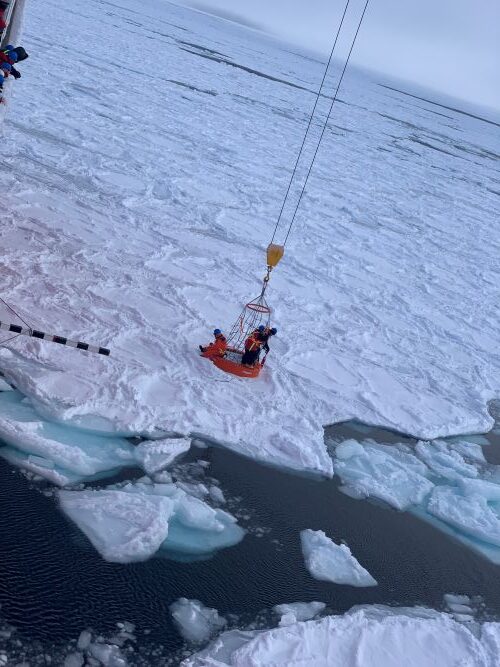
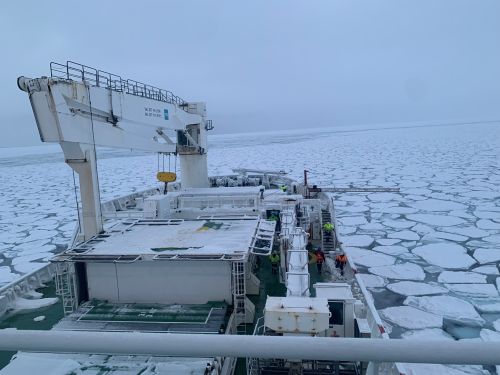
Supported by SAPRI, the scientific team boarded the SA Agulhas II polar research vessel for the SCALE (Southern Ocean Seasonal Experiment) winter expedition. Departing Cape Town on 11 July 2022, the multi-institutional team faced howling polar winds and bone-chilling temperatures plunging down to -20⁰C.
“Our first objective was just to determine what microorganisms could survive during this time of year,” says Dr. Mayi Buthelezi, a marine microbiologist from SU and the study’s first author. What they found left them stunned.
The Microbe Survival Method
The microbes trapped inside the freezing sea ice weren’t just surviving; they were actively shielding themselves using a super-compound called DMSP. Think of DMSP as nature’s ultimate anti-stress buffer. Under freezing winter conditions, these tiny organisms produce it to survive without burning precious energy.
Dr. Buthelezi’s team discovered that the sea ice contained up to 38-fold higher concentrations of DMSP than the surrounding open ocean water.
In a balanced system, this matters immensely. When these pathways cycle normally, the breakdown of DMSP yields gases (DMS and MeSH) that enter the atmosphere, seed thick polar clouds, and act like a giant reflective mirror, cooling the planet down.
Why This Is a Beneficial Find
This brand-new discovery is incredibly beneficial because it identifies a critical “blind spot” in how we predict our weather.
By mapping this dynamic ecosystem, scientists can now plug these microbial communities directly into AI Earth system models. This is where it hits home for us: the Western Cape and Eastern Cape was recently battered by severe floods that caused billion Rands of infrastructure damage, dropping a catastrophic ±600 mm of rain in some areas. Those supercharged storms are manufactured in the Southern Ocean.
The warning from the report is that as climate change warms the planet and thaws the sea ice, this massive vault of DMSP will be dumped into the seawater all at once. Instead of cooling the atmosphere, seawater microbes will aggressively consume it as food, disrupting the global sulfur cycle. When this natural thermostat is destabilized, ocean temperatures fluctuate rapidly, creating the volatile conditions that turn normal winter cold fronts into infrastructure-destroying weather beasts.
By unlocking the secret of the ice warriors, our local scientists have given the world the exact data needed to improve early warning systems—allowing cities like Cape Town to predict, prepare for, and survive the extreme climate shifts of the future.