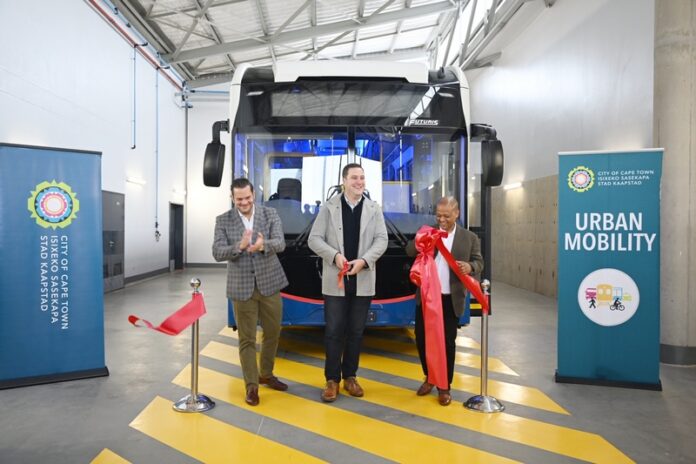
When Cape Town Mayor Geordin Hill-Lewis took a spin on “Evie”—the city’s very first fully electric MyCiTi bus—he was testing more than just smooth acceleration on steep inclines. He was ushering in a cleaner, quieter, and far more resilient future for South African urban transit.
Having aced performance trials along demanding routes like Hospital Bend and the N2 highway, Evie has officially paved the way for an initial fleet of 38 battery-electric Volvo buses. But beyond the technology, what does this milestone actually mean for everyday Capetonians and the lifestyle of the Mother City?
1. Protection Against Diesel Price Shocks
For commuters, one of the biggest frustrations with public transport is unpredictable fare hikes caused by volatile fuel markets. Battery-electric buses break that cycle. By moving away from diesel, the MyCiTi network can significantly cut running expenses—with international operators reporting up to 70% savings in operational costs. For local passengers, this translates directly into more stable, predictable, and affordable fares over the long term.
2. Empowering the Cape Flats and Commercial Hubs
This fleet isn’t just a pilot project for short CBD loops. The new e-buses are earmarked for deployment along the R7.1 billion Metro-South East expansion, South Africa’s largest metro-led public transport investment.
Connecting over 1.4 million residents across 30 neighbourhoods—from Mitchells Plain and Khayelitsha to key commercial corridors in Wynberg and Claremont—the fleet will provide dignified, low-noise, zero-emission transport where it is needed most. It ensures that high-quality, modern transit is accessible to communities across the metro.
“The key benefit of electric buses is affordability for customers. These electric buses will make our fleet less susceptible to diesel price changes, which means more stable and affordable fares for commuters.”
— Mayor Geordin Hill-Lewis
3. Boosting Local Industry and Job Creation
Green technology is most powerful when it fuels the local economy. In a major win for South African manufacturing, these 12-metre Volvo e-buses feature locally designed and assembled bodies—marking the first time MyCiTi bus bodies are being built domestically. Assembling the fleet in South Africa directly supports local manufacturing jobs and builds critical industrial capacity in clean-energy vehicle technology.
4. A Greener, Quieter City Life
A thriving urban lifestyle depends on clean air and liveable environments. Traditional diesel buses contribute heavily to urban exhaust emissions and street noise. Battery-electric buses produce zero tailpipe emissions and operate almost silently, creating healthier, quieter city corridors.
With MyCiTi annual ridership jumping 68% since 2021 to 23 million trips, shifting to electric power guarantees that expanding public transit won’t come at the expense of air quality or urban comfort.
The Bottom Line
With the first batch of e-buses arriving before the end of the year and final deliveries running through early 2027, Cape Town is setting a bold benchmark for sustainable African cities. Evie may be the first, but she represents a massive step toward a city that moves faster, cleaner, and smarter.