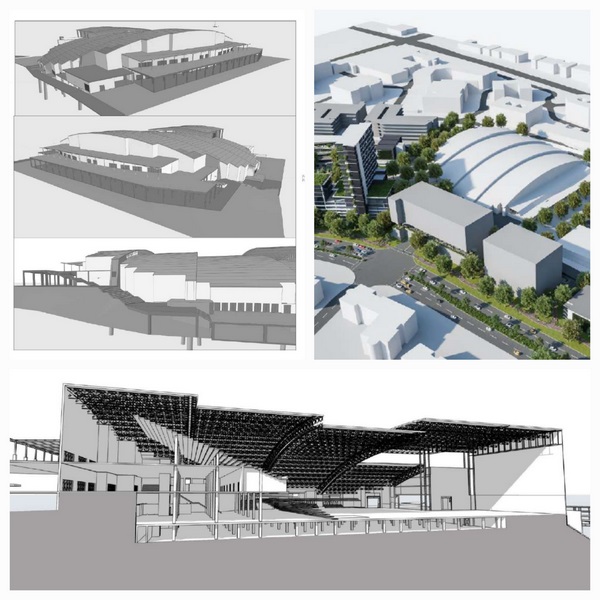
The Bellville Velodrome precinct, once the centerpiece of Cape Town’s 2004 Olympic bid, is poised for a massive R5-billion transformation. After nearly two decades of legal hurdles and economic stagnation, the City of Cape Town has finalized a landmark deal with the Devmark Property Group (operating through the Devmet consortium) to redevelop the site into a world-class mixed-use precinct known as The Galleria. While the City hails this as a “win-win” for urban regeneration, it has ignited a fierce battle with South Africa’s cycling community over the loss of a provincial sporting crown jewel.
The Developer’s Vision: Revitalizing the Northern Suburbs
Devmark Property Group has been the visionary force behind the project since the original 2009 tender. For Devmark, the significance of this development lies in its ability to turn a dormant, high-maintenance public asset into a vibrant, 24-hour economy. By integrating the stadium with high-end retail, A-grade office space, and residential units, the developer aims to create a “work-live-play” hub that will act as a massive stimulus for the Bellville CBD and the N1 economic corridor.
Devmark argues that this private-sector investment is the only sustainable way to ensure the facilities are maintained to international standards for the next 50 years. This model effectively removes the heavy financial burden from the city’s ratepayers while creating thousands of jobs and generating long-term revenue for future generations.
What is Planned: The Modern Arena and Beyond
The project involves a long-term lease of the Velodrome and athletics track to the developer. Under the proposal, the Velodrome will be converted into a premier multi-purpose indoor arena with a seating capacity of approximately 14,000 to 18,000 spectators, specifically designed to host major international concerts and large-scale sporting events.
The adjacent Bellville Athletics Track will be retained as a public facility but will receive a comprehensive, competition-compliant overhaul to better support schools, clubs, and regional programs. Beyond the sporting footprint, the surrounding vacant land will be transformed into a modern precinct featuring a business hotel, commercial offices, and retail centers, bridging the economic gap between the Northern Suburbs and Cape Town’s broader business hubs.
The Friction: The Cycling Community’s Outcry
However, this progress comes at a cost that Cycling South Africa finds difficult to bear. The core of the antagonism lies in the removal of the existing indoor timber cycling track—the only Olympic-standard 250m indoor velodrome on the African continent. The cycling community argues that this move effectively “de-sports” the venue, stripping elite cyclists of their only high-performance indoor training ground and ending the city’s ability to host UCI-sanctioned international events.
While the City has committed R20 million to upgrade the Vygieskraal Stadium in Athlone as a new central hub for cycling, enthusiasts point out that an outdoor facility cannot replicate the technical advantages of an indoor, climate-controlled track. For many athletes, the transition feels like the end of an era for professional track cycling in the region.
Going Forward
As the City moves to execute the contracts and construction preparations begin for July 2026, the transformation of the Bellville Velodrome stands as a case study in modern urbanism: the difficult balance between commercial viability and the preservation of niche sporting heritage. While The Galleria promises to be a beacon of economic growth for Cape Town, the cycling fraternity remains resolute in their stance that a city’s progress should not come at the expense of its athletes’ dreams.