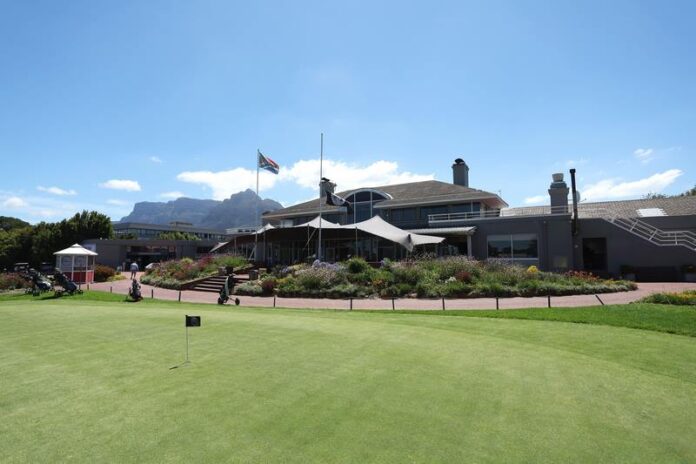
For over a century, the urban landscape of Cape Town’s southern suburbs has been defined by the sprawling green canvas of the King David Mowbray Golf Club (KDM). Established in 1910, Mowbray Golf Club—which merged with King David Golf Club in 2016—has long stood as a historic sanctuary of parkland fairways and indigenous flora. Today, however, this century-old institution is executing a quiet revolution in how municipal land serves its surrounding city.
By introducing a new, purpose-designed 4.05 km walking and running trail network through its grounds, KDM is proactively transforming from an exclusive sporting enclave into an inclusive, shared public sanctuary.
Reimagining an Irreplaceable Green Lung
Historically, golf courses across South Africa operated as closed ecosystems, gated off from the broader public and reserved solely for paying members playing eighteen holes. But urban space in the 21st century demands multi-functional utility. KDM’s newly unveiled path network bridges this gap by offering four distinct routes: a 1.41 km Bottom Loop, a 1.58 km Top Loop, a 2.99 km Outer Loop, and a comprehensive 4.05 km Figure 8 Loop linking the upper and lower sections.
By replacing narrow, uneven dirt tracks with standardized 2.0- to 2.4-metre-wide pathways, the club opens its tree-lined corridors to local runners, morning walkers, and on-leash dog owners. Set to debut its 1.58 km Top Loop near Links Drive in early 2027, the club is integrating itself directly into the daily rhythms of Pinelands and surrounding neighbourhood life.
A Timely Defence Against Urban Encroachment
This strategic opening comes at a critical historical juncture. In May 2026, the City of Cape Town published a controversial draft concept proposing the total redevelopment of the KDM site into a massive mixed-use precinct containing approximately 6,700 residential units, commercial spaces, and light industrial zones. While the public comment window closed in August 2026 following outcry from environmentalists, heritage bodies, and ratepayer associations, the proposal remains in an early, exploratory phase.
Against this backdrop, opening the grounds immediately to the general public via a nominal walking membership is a masterstroke of civic preservation. It showcases that a golf club can protect a vital ecological corridor along the Liesbeek area while simultaneously supporting local sports institutions like Clyde Pinelands FC—the country’s oldest non-amalgamated football club—alongside youth development and the South African Disabled Golf Association (SADGA).
The Modern Take: Evolution Beats Eradication
Concrete and high-density housing are easy to build, but a 116-year-old ecological green lung is impossible to replace once paved over. The debate surrounding municipal golf courses should not be framed as an “all-or-nothing” choice between exclusive sports grounds and high-density development.
KDM’s decision to move forward with the trail now—utilizing its existing lease rights rather than waiting on municipal development timelines—offers a sensible middle path: adaptive integration. By lowering its perimeter fences to accommodate dog walkers, joggers, and families, King David Mowbray proves that historic sporting grounds can evolve to serve the entire public, cementing its status as an indispensable asset for generations to come.