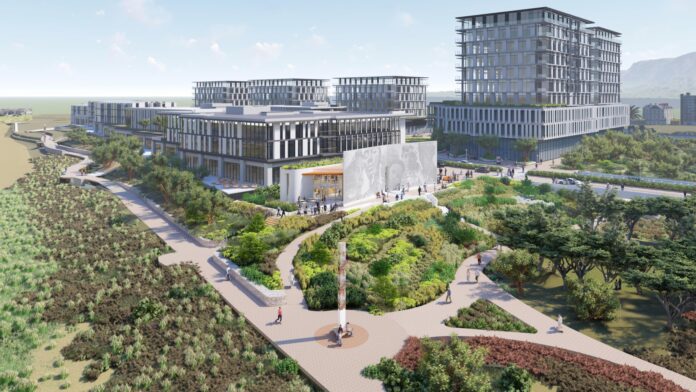
Cape Town property developers are rapidly shifting away from high-density, high-impact concrete developments toward a new framework: eco-restorative urban design.
Unlike remote game reserves, urban developers in Cape Town face tight spatial constraints and delicate municipal ecosystems. Rather than displacing nature, modern developments actively fund ecosystem restoration and establish green corridors that reconnect fragmented habitats directly within the suburban footprint.
Cape Town developers are pioneering urban conservation through several key approaches:
Fynbos Corridor Restorations
Urban projects across the City Bowl and Southern Suburbs are transforming degraded land into indigenous green corridors. By integrating vertical fynbos walls, green rooftops, and ground-level plantings of critically endangered Peninsula Granite Fynbos, developments provide vital nectar stops for native bird species, such as sunbirds and sugarbirds. This reconnects Table Mountain National Park to surrounding lowland reserves.
Wetland & Waterway Stewardship
Along urban catchments near the Cape Flats, Century City, and the Southern Peninsula, developers are replacing concrete drainage with natural wetlands and vegetated bio-swales. Coupled with permeable paving and multi-stage rainwater harvesting systems, these natural buffers filter urban stormwater runoff while restoring crucial breeding habitats for the endangered Western Leopard Toad (Sclerophrys speciosus).
Public-Private Environmental Partnerships (PPP)
Forward-thinking developers collaborate with the City of Cape Town, CapeNature, and local biodiversity networks to establish formal Conservation Management Plans (CMPs). Funded through ongoing sectional title levies, these agreements provide long-term capital for dedicated urban conservation officers, indigenous restoration, continuous invasive alien plant clearing, and public park maintenance.
Building Climate-Resilient Urban Spaces
Beyond biodiversity, eco-restorative development strengthens municipal climate resilience. Green roofs and tree canopies mitigate the urban heat island effect, keeping inner-city temperatures cooler during peak summer months. Simultaneously, restored natural wetlands reduce urban flood risks during winter downpours, absorbing surplus runoff before it reaches municipal infrastructure.
By embedding biodiversity conservation directly into architectural designs, Cape Town’s urban developers are demonstrating that commercial growth and environmental stewardship can successfully coexist—ensuring that even in high-value urban nodes, the Cape Floral Kingdom thrives alongside modern residential living