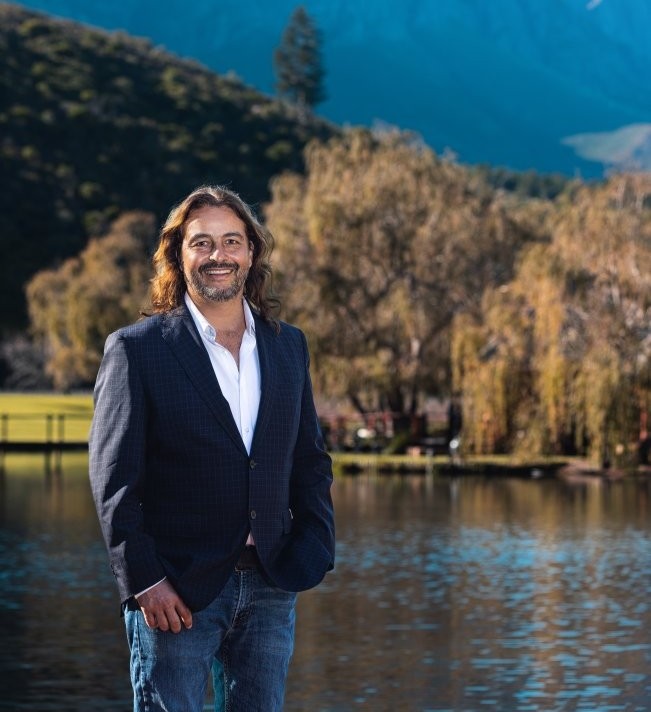
Genomic surveillance led by South African researchers under Professor Tulio de Oliveira gained world renown when his team swiftly identified the Beta and Omicron SARS-CoV-2 variants, putting African science at the center of global public health. Now, receiving the prestigious European Society for Clinical Virology (ESCV) Gardner Lectureship Award in Porto, Portugal—alongside the Honor of Merit Medal from the President of Portugal—De Oliveira isn’t looking back at past pandemics. He is charting the course for how we will live safely through future ones.
Beyond international accolades, his vision tackles a challenge that affects every household: how changing weather patterns, smart technology, and microscopic pathogens cross paths in our day-to-day existence.
When Climate Change Meets Human Health
It is easy to view climate change strictly as a story of rising seas or extreme weather, but environmental shifts directly alter how viruses move through communities. Changing weather patterns, shifting rainfall, and altered ecosystems bring wildlife, vectors like mosquitoes, and humans into closer contact than ever before.
Through initiatives like CLIMADE (Climate Amplified Diseases and Epidemics), De Oliveira’s work at Stellenbosch University’s Centre for Epidemic Response and Innovation (CERI) bridges environmental science, data analysis, and medicine. By understanding how extreme weather triggers disease outbreaks, researchers aim to move public health from merely responding to health crises to anticipating them before they disrupt daily life, travel, or work.
Combining AI and Genomics for Early Warning
Speed and accuracy are essential in global health security. The new frontier in epidemic intelligence relies on bringing together advanced technologies to detect threats early.
By integrating genomic sequencing with artificial intelligence, climate information, and real-time epidemiology, researchers can analyze complex health patterns far faster than traditional methods allowed. Rather than waiting for an outbreak to spread, combining AI with genomic surveillance allows scientists to spot emerging threats early—buying precious time for governments, clinicians, and communities to act and protect vulnerable populations.
African Innovation Leading Global Science
Perhaps the most inspiring aspect of De Oliveira’s recognition is where this world-leading research is based. Historically, global health solutions flowed from Western laboratories into developing nations. De Oliveira, alongside collaborative teams at CERI and the University of KwaZulu-Natal (UKZN), has flipped that dynamic.
“Africa should not simply be a recipient of scientific knowledge and technology,” De Oliveira notes. “We can generate discoveries, build technologies, train the next generation, and lead scientific responses that benefit the entire world.”
Protecting Tomorrow, Today
Receiving the Gardner Lectureship Award—a distinction previously awarded to South African virologist Prof. Robert Swanepoel in 2003—serves as a reminder of South Africa’s long-standing leadership in emerging infectious diseases. Ultimately, the goal remains deeply practical: using high-tech innovation to safeguard human lives. By uniting genomic science, artificial intelligence, and climate awareness, South African scientists are ensuring that the world is better prepared, more resilient, and safer for generations to come.