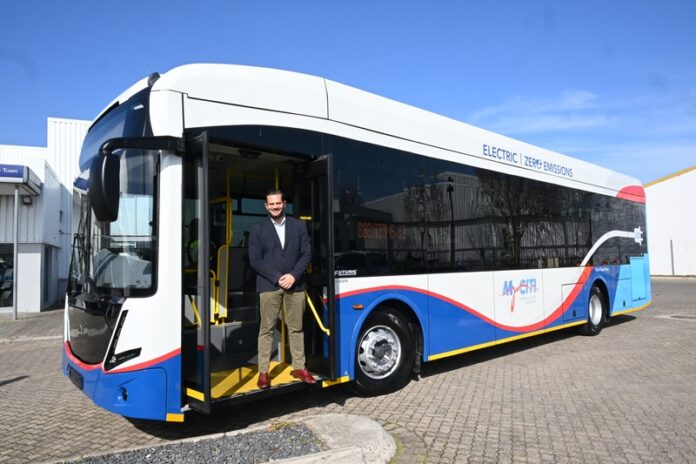
The Mother City’s morning commute is about to get a whole lot quieter—and much cleaner. Cape Town has officially taken delivery of its very first battery-electric MyCiTi bus, marking a major milestone in the city’s shift toward a sustainable, zero-emission future.
Freshly arrived from Johannesburg, where its body was locally designed and manufactured, this prototype Volvo BZRLE vehicle is the first of a planned 38-bus electric fleet. Over the next few weeks, eagle-eyed residents will spot the brightly branded e-bus undergoing rigorous testing across the city’s most challenging route profiles.
Testing Cape Town’s Elements
Before commuter doors open, the city—in partnership with the University of Cape Town (UCT)—is putting the prototype through its paces. It will tackle the steep inclines of Hospital Bend, the high-speed stretches of the N2, the winding coastal roads of Camps Bay, and stop-and-go gridlock on routes like Polkadraai Road and Jip de Jager Drive.
Backed by a development grant from the Urban Electric Mobility Initiative (UEMI), the UCT research team will analyse exactly how the vehicle reacts to commuter weight, battery charging intervals, and Cape Town’s notoriously unpredictable climate. The operational data gathered will be crucial for refining backend logistics, mapping out charging strategies, and structuring future driver training.
What This Means for the City
This arrival is more than just a technological upgrade; it represents a fundamental shift in how Capetonians will experience urban life.
A Quieter, Cleaner Urban Landscape: By trading diesel engines for electric batteries, the new fleet will directly reduce air pollution and traffic noise along major transport corridors.
Insulation from Fuel Volatility: Global oil markets are increasingly unstable. Shifting to an electric fleet allows the city to build a public transport system less dependent on fluctuating diesel prices.
Drastically Lower Running Costs: Data from cities worldwide suggests operating and maintenance expenses can drop by up to 70% when switching from diesel to electric. This financial cushion helps ensure long-term stability for the transit network.
Boosting the Local Economy: Though the chassis comes from Volvo, the bus bodies are being designed and built entirely within South Africa. This keeps manufacturing spend within the country, creating and supporting domestic automotive jobs in Gauteng.
When Can You Ride It?
If the upcoming road trials are successful, the full fleet of 38 low-floor electric buses is scheduled for operational roll-out by 1 July 2027.
The city has strategically earmarked these green vehicles for the highly anticipated Phase 2A expansion project. Commuters travelling across the metro-south east between Mitchells Plain and Khayelitsha, as well as those on the Wynberg to Claremont routes and within the Cape Town CBD, will be the first to experience the smoother, quieter ride of the city’s electric future.