Imagine a massive, invisible extension cord running all the way from a rushing river in the Free State, stretching across the Karoo, and plugging directly into your favourite shopping mall or urban office building in Cape Town. Sounds like science fiction, right? Except its officially reality.
In a major win for the Mother City’s green credentials, a groundbreaking partnership between Etana Energy, Growthpoint Properties, and the City of Cape Town has just unlocked a historic milestone: the city’s very first “pooled renewable electricity wheeling” system. The first official allocation was completed in April 2026.
But behind the heavy technical jargon lies a beautifully simple concept that is about to completely change how South African cities power themselves. Here are why these matters to everyday Capetonians.
What is ‘Pooled Wheeling’?
To understand why this is a game-changer, you have to look at how rigid the old system used to be. Previously, if a commercial building wanted to use green energy from a remote solar or hydro plant, it was a strict, one-to-one relationship. Think of it like a single digital download that only works on one specific device. If that building didn’t use the power on a Sunday, it went to waste.
Pooled wheeling is the ultimate upgrade to a shared cloud network. Instead of restricted individual accounts, Etana Energy acts like a master streaming platform. They harvest clean electricity from various remote generation sites—starting with the Boston Hydroelectric Plant near Clarens—and dump it into a single, massive digital “pool.”
From there, the energy is dynamically routed to wherever demand is spiking across an entire portfolio of properties. It’s flexible, instantaneous, and completely eliminates the bureaucratic billing nightmare for the municipality. Everyone shares the data cloud, and everyone gets a seamless experience.
The Greenest Spaces in Town
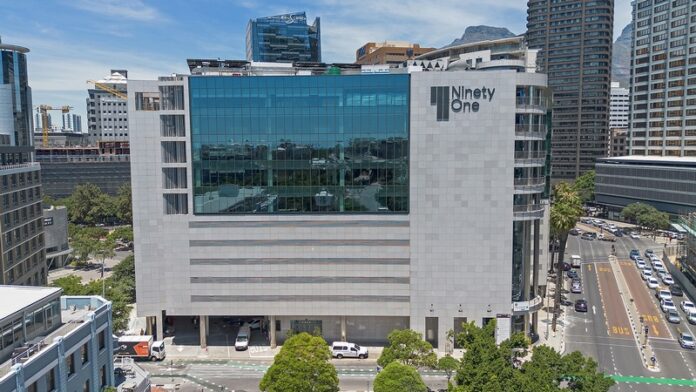
If you’ve driven down the Foreshore recently, you’ve likely noticed the stunningly refurbished 36 Hans Strijdom building. Occupied by asset management firm Ninety One, this sleek, eco-innovative retrofit is now officially 100% powered by renewable energy via this new pool. It proves that dense, bustling urban skyscrapers don’t have to rely on fossil fuels to keep the lights on.
But it’s not just office workers benefiting. The green energy pool is already actively powering four other iconic local spots:
- Constantia Village Mall (meaning your weekend shopping trips just got a lot cleaner)
- Centennial Place in Century City
- Montclare Place in Claremont
Newlands on Main This is just the tip of the iceberg. Over the coming months, Growthpoint plans to expand this initiative to more than 30 properties across the Mother City, spanning retail, logistics, industrial, healthcare, and student accommodation. Even the world-famous V&A Waterfront is lined up to join the energy pool soon as more generation facilities come online.
Why This Matters
South Africans are tired of worrying about electricity. This initiative matters because it represents true urban resilience. This project is the result of over 18 months of intense collaboration between private innovators and local government, showing what happens when progressive policy shifts actually meet real-world action.
As Growthpoint’s SA CEO Estienne de Klerk points out, this allows businesses to deliver clean electricity to tenants flexibly and at a competitive price. No massive capital outlays for individual buildings, just clean power delivered straight through the plug points.
Cape Town is officially claiming its crown as Africa’s green energy hub. It’s smarter, cleaner, and a massive step toward a future where our daily lifestyle isn’t dictated by a fragile power grid.