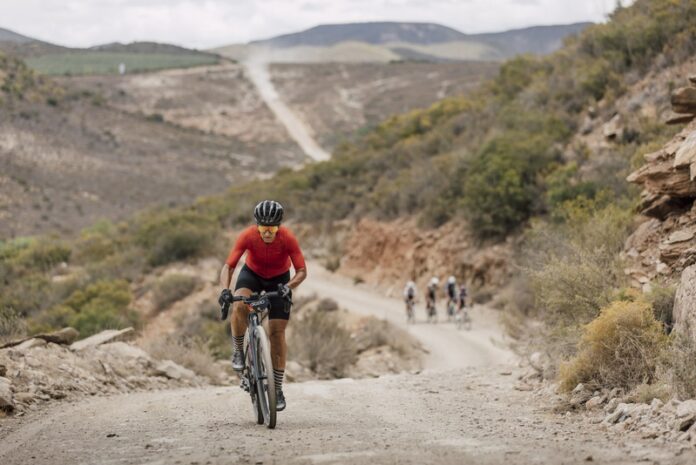
Racing Meets Relaxation
The Giro caters to elite racers and social riders alike. While competitive cyclists will battle for podium positions, others are encouraged to soak up the scenery and embrace a more relaxed pace. Off the bike, recovery and enjoyment are just as important, with a format that promotes rest and exploration.
Route Changes for Safety
Recent route adjustments reflect both rider experience and broader national concerns. Stage 1 will now start at Jakkalsvlei Private Cellar instead of Mossel Bay, shortening the distance, while the Queen Stage has been reduced by 30 kilometres. These decisions were influenced by Foot and Mouth Disease considerations, with organisers working alongside local authorities to ensure a responsible approach.
Stage 1: A Gentle Introduction
The opening stage covers 73 kilometres with 950 metres of climbing. It is expected to be fast and relatively flat, though wind could play a decisive role. Designed as a gentle introduction, it allows riders to settle into groups and find their rhythm without the pressure of a longer opening day.
Stage 2: Climbing Begins
Stage 2 introduces the first serious climbing challenge, featuring Garcia Pass and Rooiberg Pass. Riders will tackle 2 050 metres of ascent over 92 kilometres before a fast, largely downhill finish.
Stage 3: The Swartberg Test
Stage 3 is defined by the ascent of Swartberg Pass. After rolling terrain and a sprint section early on, the route climbs steadily toward the summit, where significant time gaps are expected. The descent into Prince Albert demands caution due to its technical nature.
Stage 4: Power vs Climbing
Stage 4 offers opportunities for stronger, power-focused riders. While climbers may gain early advantage over Swartberg Pass, the rolling Oudemuragie roads provide terrain for chasers to close gaps. For more social riders, it presents a chance to tick off a double crossing of the iconic pass while enjoying the scenery.
Stage 5: The Queen Stage
The Queen Stage, Stage 5, is the toughest of the race. Starting at Hoekplaas near De Rust, the 127-kilometre route includes 2 400 metres of climbing, highlighted by Prince Alfred’s Pass. Riders will journey from the Klein Karoo through the Langkloof to the forests of Knysna, with ever-changing landscapes offering motivation throughout the demanding day.
Stage 6: A Scenic Finale
The final stage follows the scenic Seven Passes Road from Knysna to Wilderness. While largely ceremonial, racing may still be decided in some categories. The route winds through indigenous forests with glimpses of the Indian Ocean, ending with the possibility of a sprint finish—or a well-earned swim.
Lifestyle Experience
Beyond racing, the Giro emphasises lifestyle. Later starts allow for relaxed mornings, while afternoons are free for recovery. A dispersed race village model lets participants choose between on-site dining or exploring nearby towns, supporting local businesses along the way.