Vergelegen in Somerset West is celebrating a remarkable season of new life at its 3 000-hectare wine estate, which includes a 400-hectare game camp located within a 1 980-hectare nature reserve. The estate’s conservation areas have been alive with activity over the past few months, marking a standout period for wildlife and biodiversity.
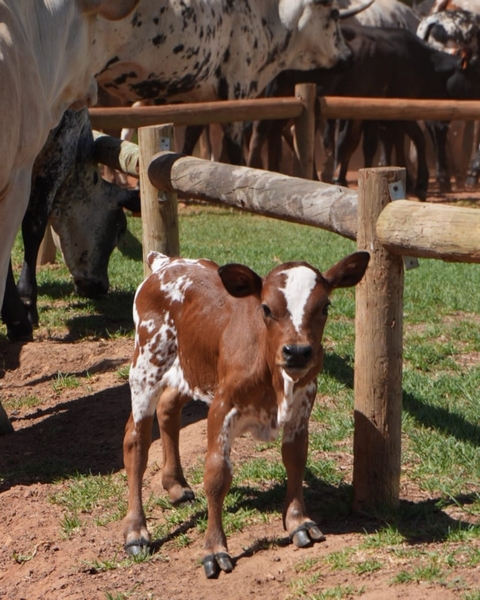
The most unusual newcomer is a dwarf Nguni calf, born on 26 December. With short, stocky legs and a distinctive brown-and-white spotted hide, he is expected to grow no taller than between knee and waist height when fully grown. His arrival has drawn particular interest from staff and visitors alike.
“Dwarf Nguni cattle have a much shorter lifespan than standard Nguni – usually around four years, compared to up to 20 years for a normal Nguni,” says Vergelegen’s environmental manager, Eben Olderwagen. “His mother is very protective and closely monitors anyone who approaches.”
Nguni Calves Steal the Spotlight
The calf, who is yet to be named, joins another young Nguni, Henry, who is mostly white in colour and something of a celebrity on the estate. Bottle-fed and tame, Henry has formed a close bond with hospitality and events manager Sue Steenkamp and is often seen enjoying time in her garden.
Both calves were late arrivals. Between July and September last year, Vergelegen welcomed an impressive 133 Nguni calves, bringing the total Nguni herd to around 450 animals. The strong numbers reflect careful herd management and favourable environmental conditions.
A Baby Boom Across the Reserve
The baby boom has extended beyond cattle. Two eland calves were born in mid-December 2025, boosting the estate’s eland population to 11. The original five eland – three cows and two bulls – were introduced in July 2020 from Elandsberg near Wellington as part of a long-term project to monitor their grazing impact on fynbos species and grasses.
Seven bontebok lambs were born in October 2025, bringing the total bontebok population at Vergelegen to approximately 90. While this is slightly below the usual 12 to 15 lambs born annually, Olderwagen explains that the shift is natural. “Young females are reaching breeding age, and new breeding groups are forming as young males establish their territories.” Bontebok were first introduced to Vergelegen in 2008, when 13 animals were relocated from the nearby Helderberg Nature Reserve.
Conservation, Owls and the Rare Rau Quagga
Vergelegen is also home to several spotted eagle owls, with a pair breeding annually in oak trees near the management offices. In November last year, two owlets were discovered out of their nest at the base of a tree, where their parents continued to feed them until they were able to fly.
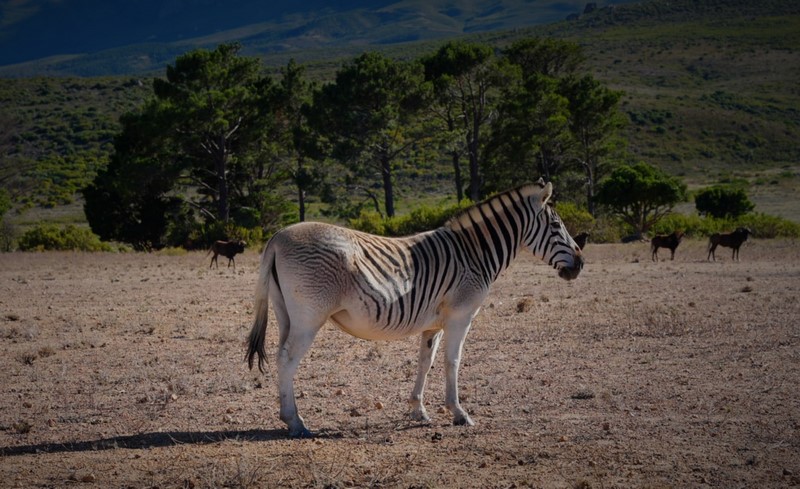
Further excitement is expected soon, with two Rau quagga mares heavily pregnant. Vergelegen is currently home to 10 Rau quagga, which form part of an ambitious conservation initiative launched in 1987 to selectively breed southern plains zebra that closely resemble the extinct quagga.
Visitors interested in learning more about the estate’s wildlife and biodiversity initiatives can book a guided environmental tour in an open-top game-drive vehicle, offering a rare opportunity to experience conservation in action.